
KPFP
Kenya Paediatric Fellowship Programme
About KPFP
The Kenya Paediatric Fellowship Program (KPFP) is a Kenya Paediatric Association (KPA) initiative designed to address the critical shortage and unequal distribution of paediatric subspecialists and specialist paediatric nurses in Kenya. Despite significant investments in health infrastructure at county level, many facilities lack adequately trained specialists to deliver advanced newborn and child health services, particularly in underserved regions.
KPFP was established 2019 to strengthen Kenya’s capacity to train, deploy, and retain paediatric subspecialists locally through scholarships to paediatricians, nurses, and midwives to pursue advanced training in high-need paediatric subspecialties. In Phase I, the program focused on sponsoring paediatricians into fellowship programs, building in-country subspecialty training capacity, supporting specialist nurse training, standardizing curricula, and strategically deploying graduates to counties with the greatest need. The program also incorporated structured post-training mentorship and monitoring to enhance service impact and retention.
However, challenges such as county staff release for training and workforce retention highlighted the need for innovative, decentralised training approaches. Phase II builds on this progress by: expanding and strengthening subspecialty training programs; emphasizing multidisciplinary team training; enhancing mentorship and quality improvement initiatives; supporting faculty and curriculum development; strengthening deployment and retention strategies in targeted counties; advocating for increased investment in paediatric specialized care through specialized laboratory testing as well as equipment support to targeted facilities.
Through strategic selection, training, mentorship, redeployment, advocacy, and policy engagement, KPFP aims to improve access to high-quality paediatric subspecialty services, strengthen county-level health systems, and ultimately reduce perinatal, neonatal, child, and maternal mortality and morbidity in Kenya.
A key innovation linked to KPFP’s sustainability is the operationalization of the East, Central and Southern Africa College of Paediatrics and Child Health (ECSAPACH), which supports standardized, accredited training across multiple high-activity hospital sites while maintaining centralized quality assurance across the ECSA region. To date, six countries in the region, through their respective paediatrics associations/societies have affiliated with the college. Enrollment of the first cohort of trainees pursuing fellowship in general paediatrics was realized in October 2025 in two countries, Kenya and Zimbabwe across eight accredited training hospitals.
Background
There is a shortage of paediatric specialists and nurse midwives in Kenya. A case in point is that of paediatricians, whereby of the available 440 paediatricians, only 114(25.9%) are working in the public sector. A further assessment against the recommended staffing levels shows that only an estimated 5 County Referral Hospitals have the recommended four paediatricians. Even more grave is the lack of paediatric sub-specialists in the public facilities as they primarily work in national referral hospitals and the private sector and, most specifically, in Nairobi County. With these shortages and skewed distribution, most children requiring specialized care have reduced chances to survive and thrive. KPFP was established to begin addressing shortages of childcare specialists through building Kenya’s training institutions’ capacity to offer quality paediatric sub-specialty training programs to Kenyan paediatric specialists and the African region at large.
Overall goal and aims of KPFP
The overall goal of KPFP is to expand the capacity of training institutions to select, train and deploy quality Paediatric sub-specialists, midwives, and Paediatric nurses and address the shortage and inequitable distribution of specialized child health workforce in the public sector.
Objectives
- Improve strategic selection and deployment to address inequitable distribution of specialized child health workforce
- Train specialists in pediatrics and maternal-newborn health
- Support Universities to build faculty capacity and establish infrastructure to develop new pediatric sub-specialty fellowship programs
- Improve the quality of training and mentorship of graduates to increase impact post-deployment


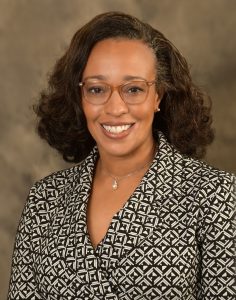

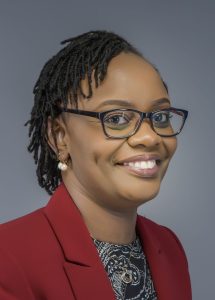
 DR. JOY MUYONGA

 Dr. Barnabas Kigen
 DR. JUSTUS MAINGI SIMBA MBChB, PhD.
 CAREN ITO EMADAU
 AFFILIATIONS: Gertrudes Childrens Hospital
 President

 AFFILIATIONS: Department of Paediatrics and Child Health, Kenyatta University.
 AFFILIATIONS:
 AFFILIATIONS: Aga Khan University Hospital
 AFFILIATION: Medical services Nairobi City County

 AFFILIATIONS: Aga Khan University Nairobi, Kenya.
 AFFILIATIONS: Department of Paediatrics and Child health, University of Nairobi.
 Denish Osodo works at Safaricom Limited as the Internal Audit Director. He has wide and deep experience in Assurance, Governance and Risk Services. Prior to joining Safaricom, he worked at PricewaterhouseCoopers (PwC) for several years, offering audit and business advisory services to Companies in different industries during his stints in Kenya and United Kingdom offices. He left PwC as a Director in the Risk Assurance Services team focusing on the provision of Internal Audit and business Controls Advisory Services to clients across Africa.
 Njeri Wahome delights in all things administration. With over 20 years of experience in operations management in the development sector, Njeri as hands-on experience in strategic planning, financial management, human resources management, administration and logistics planning. She has experience providing technical assistance to NGOs on institutional strengthening for growth and sustainability.
 Fred Were is Professor of Paediatrics and Child Health specializing in Newborn Medicine. He presently holds portfolios of; Dean School of Medicine University of Nairobi (UON), Acting Principal College of Health Sciences (UON), Adjunct Professor of Newborn Medicine at the Aga Khan University (East Africa) and Executive Director/Chief Researcher of The Kenya Paediatric Research Consortium a wing of the Kenya Paediatric Association.
 Dr. Lawrence Okong’o Owino is a lecturer at the department of paediatrics and child health at the University of Nairobi. He is also a consultant paediatrician at the Kenyatta National hospital as well as a consultant paediatrician and rheumatologist for all the major hospitals in Nairobi. He is a pioneer paediatric rheumatologist. His research interests are in the field of musculoskeletal health and immunizations. He has published papers in peer reviewed journals focussing mainly on childhood rheumatic disorders.
 Thomas Ngwiri is Head Clinician at Gertrude’s Children’s Hospital since February 2010. He is also Director of the Paediatric endocrinology training centre for Africa (PETCA) – Nairobi which trains paediatricians from sub-Saharan Africa in the field of diabetes and other endocrine disorders. He has been a member of the Kenya Paediatric association executive since 2010 and is the immediate former National Chair of the association.
 MBChB (UoN), MMed (UoN) M.Phil-MCH (UCT)). Dr Osano is a Lecturer in the Department of Paediatrics and Child Health, School of Medicine, University of Nairobi, a consultant Paediatrician cardiologist at Kenyatta National Hospital. He has been the Program Coordinator for the NIH MEPI grant awarded to the University of Nairobi: Strengthening Maternal Newborn Child Health Research Training in Kenya. He has special interest in Maternal Child Health.
 Dr. Joe Mbuthia is a graduate of the University of Oxford, with a specialty in Paediatric Infectious Diseases. He is an honorary Lecturer at the Department of Paediatrics and Child health, University of Nairobi as well as a Senior Technical Advisor to the HIV programme – Kenya Paediatric Research Consortium.
 Dr. David Githanga is an accomplished medical professional with over 37 years of clinical practice experience. He holds a fellowship of the royal college of physicians of Edinburg (2021, a PhD in Medical Immunology from the University of Nairobi. (2019), Masters in public Health from the University of London (2010), He qualified in paediatric cardiology from the Royal Hospital for sick Children in Glasgow UK (1993), A Diplomate in Child Environmental Health from Athens Greece (2005, a Master’s degree in pediatrics from the University of Nairobi (1990) having obtained his MB,chB from the same University in 1984. Over the years he has demonstrated leadership capability and strategic thinking that has been instrumental in spearheading the growth, development and integration of the Kenya Pediatric Association (KPA) where he served in executive positions for a total period of 19 years.
 Dr. Kibore received her bachelor’s degree in medicine and her master’s degree in Pediatrics and Child Health both from the University of Nairobi, Kenya, she then went on and completed a Master’s degree in Public Health from the University of Washington, USA.
 Dr. Makeba Shiroya Wandabwa is a Paediatrician and Public Health Specialist, with a strong health systems background having worked in various capacities to develop child health policies and guidelines, implement and monitor high impact child health interventions at the international, national, sub national and community levels. She has provided technical, strategic, evaluation and operational support for RMNCAH/HIVAIDS health programs funded by USAID, DFID, Global Fund and World Health Organization.
 Dr. Doris M.W. Kinuthia is medical professional with expertise in paediatrics and adolescent medicine, nephrology and HIV. She graduated from the University of Nairobi with medical qualifications MB.Ch.B and M.Med in Paediatrics. She has Certificates in Tropical medicine and Immunology from the same University. She did her fellowship in Paediatric Nephrology at the hospital for Sick Children in Great Ormond Street, London.U.K. She has a post graduate diploma and Master of Business Administration from Sunderland University U.K.

 Denish Osodo works at Safaricom Limited as the Internal Audit Director. He has wide and deep experience in Accounting and Audit with along progressive career in Assurance, Governance and Risk Services.